
 EN
EN  Romana
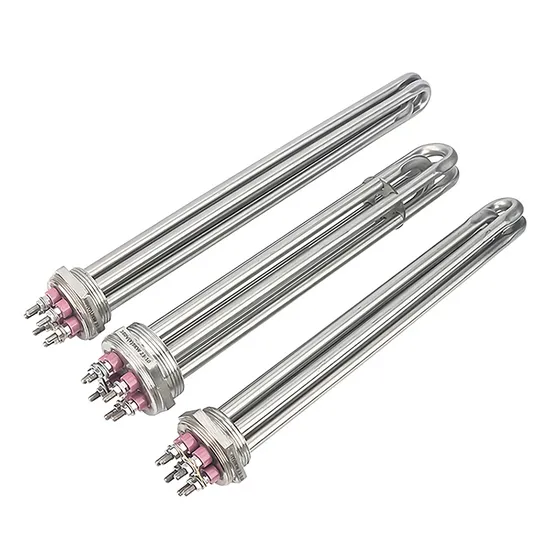
1500W, 2000W and 3000W Boiler Heating Elements – Standard Models or Custom Manufacturing
A boiler heating element must be selected according to its power, voltage, material, dimensions, mounting type and water characteristics. An undersized element may heat the water too slowly, while an incorrectly selected element may overload the electrical installation or cause improper boiler operation.
At HeatingElementStore, you can find 1500W boiler heating elements, 2000W boiler heating elements and 3000W boiler heating elements, as well as custom-made models for boilers, water tanks, solar systems, commercial equipment and industrial applications.
You do not need to adapt your installation to an unsuitable heating element. Send us the dimensions and technical requirements, and we can manufacture the correct element for your project.
You Request It, We Manufacture It
You can select the material, power, voltage, length, thread, flange, shape, electrical connection and required accessories. Each product is technically evaluated according to the heated medium and the real operating conditions.
What Is a Boiler Heating Element?
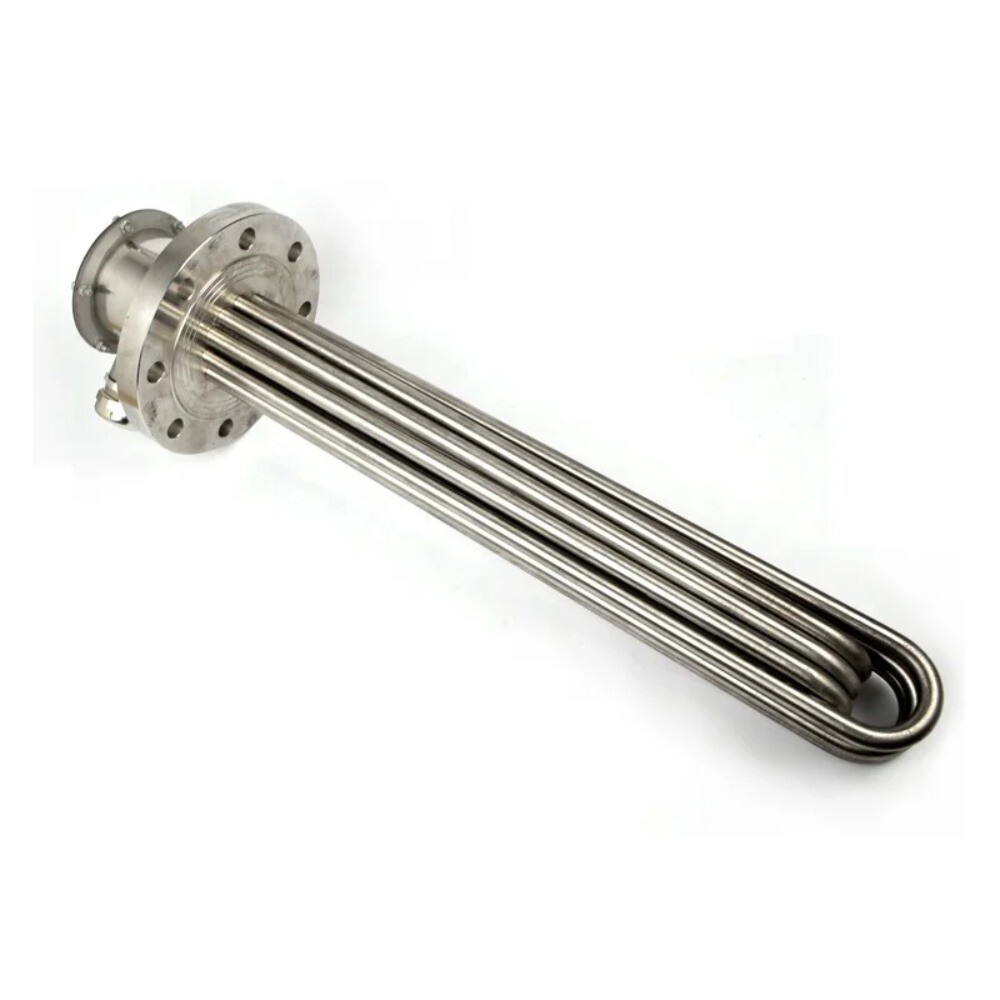
A boiler heating element is the electrical component that converts electrical energy into heat and warms the water inside the tank. Depending on the boiler design, it may be installed using a threaded connection, flange or custom mounting system.
The most commonly requested models include:
- 1500W boiler heating element for lower electrical demand and gradual heating;
- 2000W boiler heating element for a good balance between heating speed and energy consumption;
- 3000W boiler heating element for faster heating and applications with higher thermal demand;
- boiler elements with 1 inch, 1 1/4 inch, 1 1/2 inch or 2 inch threads;
- flanged heating elements for large boilers and water tanks;
- single-phase 230V or three-phase 400V heating elements;
- elements with thermostat pockets, temperature sensors or overtemperature protection.
1500W Boiler Heating Element
A 1500W boiler heating element is suitable for systems requiring moderate power and gradual heating. It is frequently used in electric boilers, water tanks and installations where the available electrical circuit does not support a higher load.
A 1500W element can be manufactured for 230V or other voltages, depending on the application. We can produce 1500W boiler elements from stainless steel, copper, Incoloy or other suitable materials, with either threaded or flanged connections.
Before choosing the product, check:
- the supply voltage;
- the tank capacity;
- the available installation length inside the boiler;
- the thread or flange dimensions;
- the water quality and level of limescale formation;
- the mounting position.
2000W Boiler Heating Element
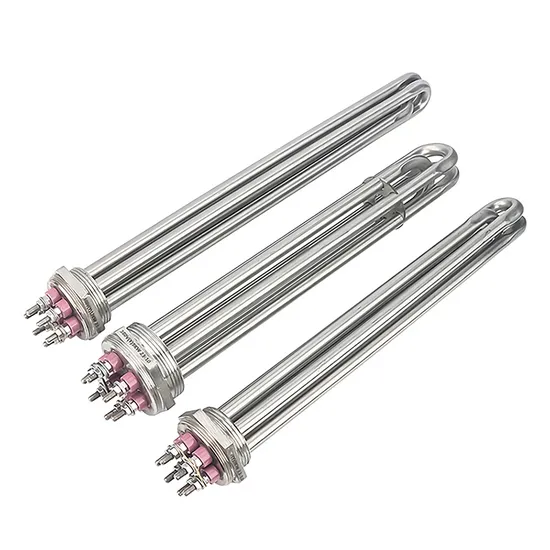
The 2000W boiler heating element is one of the most frequently requested options for electric boilers and water storage tanks. Its 2000W power rating provides a practical balance between heating time, electrical consumption and installation requirements.
2000W models can be manufactured with a standard thread, flange or customized fixing system. Depending on the water quality and operating temperature, the sheath can be made from AISI 304, AISI 316L, AISI 321 stainless steel, copper or Incoloy.
For a custom-made 2000W boiler heating element, we can adapt:
- the active and total length;
- the tubular element diameter;
- the heating element shape;
- the thread dimensions;
- the distance between the heating tubes;
- the electrical terminal position;
- the thermostat, PT100 or thermocouple pocket;
- the terminal enclosure and protection rating.
3000W Boiler Heating Element
A 3000W boiler heating element is recommended for applications requiring faster heating or greater thermal output. It can be used in boilers, hot-water storage tanks, solar systems, HoReCa equipment and technical installations.
Before installing a 3000W element, the capacity of the electrical circuit must be checked. The installation must include correctly sized cables, suitable circuit protection, protective earthing, a thermostat and an independent overtemperature safety cut-out.
Higher power does not automatically mean that the product is suitable for every boiler. The active surface, element length, watt density and distance from the tank walls must be calculated correctly.
Comparison Between 1500W, 2000W and 3000W Boiler Heating Elements
| Power | Typical Use | Main Advantage | What Must Be Checked |
|---|---|---|---|
| 1500W | Boilers and tanks with moderate thermal demand | Gradual heating and lower electrical load | Water volume, required heating time and electrical circuit |
| 2000W | Electric boilers and general water-heating applications | Good balance between power consumption and heating speed | Thread, length, voltage and material |
| 3000W | Tanks and systems with higher thermal demand | Shorter heating time | Electrical capacity, protection devices and watt density |
The actual heating time depends on the water volume, initial temperature, required final temperature, heat losses, tank insulation and heating element position. The product should not be selected only according to the power rating of the old element.
Custom-Made Boiler Heating Elements
Not every boiler uses standard dimensions. In some cases, the thread is different, the internal installation space is limited, the water contains a high concentration of minerals or the application requires a special voltage.
Caldor Heat Engineering can manufacture custom boiler heating elements based on a sketch, technical drawing, photograph or physical sample.
The Power Can Be Selected
We can design heating elements with different power ratings, within the technical limits determined by the product dimensions, sheath material, heated medium and permitted watt density.
In addition to standard 1500W, 2000W and 3000W versions, lower or higher power models can be manufactured for residential, commercial and industrial applications.
The Voltage Can Be Selected
Depending on the electrical network and equipment design, the heating element can be manufactured for:
- 24V;
- 48V;
- 110V;
- 230V;
- 400V;
- other special voltages, subject to technical verification.
For higher power applications, three-phase operation can be used with star or delta connections, depending on the available voltage and electrical design.
The Material Can Be Selected
The sheath material must be selected according to the water quality, operating temperature, pressure, deposits and corrosion risk.
- Copper – used in certain standard water-heating applications;
- AISI 304 stainless steel – suitable for general applications with compatible water quality;
- AISI 316L stainless steel – offers improved corrosion resistance for more demanding applications;
- AISI 321 stainless steel – suitable for certain higher-temperature applications;
- Incoloy 800 or Incoloy 825 – intended for difficult operating conditions and special technical requirements;
- Titanium – suitable for certain aggressive liquids after chemical compatibility analysis.
The material must be selected according to the actual characteristics of the liquid. For treated water, salt water, chemical solutions or industrial liquids, the chemical composition and operating temperature must be provided.
The Thread or Flange Can Be Customized
We can manufacture boiler heating elements with different mounting systems:
- 1 inch thread;
- 1 1/4 inch thread;
- 1 1/2 inch thread;
- 2 inch thread;
- round flange;
- square flange;
- flange with mounting holes;
- custom flange manufactured according to the customer drawing.
Thermostats and Sensors Can Be Added
A boiler heating element can be equipped or prepared for temperature control. Depending on the project, the following options can be added:
- thermostat pocket;
- mechanical thermostat;
- independent temperature limiter;
- PT100 sensor;
- type J or type K thermocouple;
- terminal enclosure;
- high-temperature cable;
- additional terminal protection.
How Do We Select the Correct Boiler Heating Element?
To identify the correct product, we need several basic details:
- Required power: 1500W, 2000W, 3000W or another value;
- Supply voltage: 230V, 400V or another voltage;
- Thread diameter and type;
- Total length and immersion length;
- Heating element shape;
- Tank capacity;
- Initial and required final temperature;
- Type of liquid being heated;
- Tank material;
- Mounting position: vertical, horizontal or inclined;
- Requirement for a thermostat or temperature sensor.
A clear photograph of the old product, together with its dimensions and electrical data, helps us identify the correct configuration more quickly.
Why Does a Boiler Heating Element Fail?
The service life of a heating element does not depend only on product quality. Installation, limescale deposits, temperature control and water level directly affect its operation.
The most common causes of failure include:
- switching on the element without water;
- incomplete immersion of the active section;
- heavy limescale deposits;
- a faulty or incorrectly adjusted thermostat;
- absence of overtemperature protection;
- incorrect supply voltage;
- loose electrical connections;
- sheath material incompatible with the liquid;
- excessive watt density for the element dimensions;
- forced installation or mechanical deformation.
A Boiler Heating Element Must Not Operate Without Water
The active section of the heating element must be completely covered by water before electrical power is applied. Dry operation causes the temperature to rise extremely quickly and can destroy the element within moments.
The heating element must not be tested by connecting it directly to the electrical supply outside the tank. Electrical measurements should be completed with suitable instruments, without heating the product in air when it has been designed for water.
Boiler Heating Element Installation
Installation must be completed by qualified personnel. Before installation, disconnect the electrical supply, drain the tank and inspect the condition of the thread or flange.
Use a gasket compatible with the operating temperature and liquid. After installation, fill the tank and check for leakage. Electrical power must only be applied after the correct water level has been confirmed.
The installation should include:
- protective conductor and earthing;
- correctly rated circuit protection;
- residual-current protection;
- temperature control thermostat;
- independent overtemperature limiter;
- cables and connections suitable for the electrical power.
Boiler Heating Elements for Residential, Commercial and Industrial Applications
Boiler heating elements are not used only in residential systems. They can be designed for a wide range of equipment and installations:
- electric boilers;
- hot-water storage tanks;
- solar heating systems;
- HoReCa installations;
- washing and cleaning equipment;
- process tanks;
- freeze-protection systems;
- hotel and guesthouse installations;
- agricultural equipment;
- industrial water-heating applications.
Standard or Custom-Made Boiler Heating Element?
A standard model is suitable when the power, thread, length and voltage match the equipment exactly. When any of these characteristics differ, a custom-made heating element may be the safer and more efficient solution.
Custom manufacturing allows the active area to be adapted, reduces the risk of overheating and ensures correct positioning inside the tank.
Why Choose HeatingElementStore?
- Standard boiler heating elements available for ordering;
- 1500W, 2000W and 3000W models;
- Custom manufacturing according to drawings or samples;
- Material selection according to the application;
- Customized power ratings and voltages;
- Different thread and flange dimensions;
- Technical support for product identification;
- Manufacturing experience in electric heating systems;
- Delivery throughout Europe, with particular focus on the Balkan market.
Do You Need a 1500W, 2000W or 3000W Boiler Heating Element?
Send us the required power, voltage, thread size, length, preferred material and a photograph of the old product.
When the correct model is not available from stock, we can design and manufacture it according to your boiler or water tank.
You request it, we manufacture it: you define the requirement, and we develop the appropriate technical solution.
Frequently Asked Questions About Boiler Heating Elements
Which heating element should I choose: 1500W, 2000W or 3000W?
The correct choice depends on the water volume, required heating time, tank insulation and the power supported by the electrical installation. A 2000W model is commonly used, but it is not automatically suitable for every boiler.
Can I replace a 1500W heating element with a 2000W model?
Replacement is only possible when the boiler, thermostat, cables, circuit protection and electrical installation can support the higher power. The dimensions and mounting system must also be compatible.
Can a 3000W boiler heating element operate at 230V?
Yes. 3000W heating elements are available for 230V, but the electrical circuit must be checked and correctly sized by a qualified electrician.
Which material is best for a boiler heating element?
There is no single material suitable for every application. The choice between copper, AISI 304, AISI 316L, AISI 321, Incoloy or titanium depends on the water quality, operating temperature and working conditions.
Can a heating element be manufactured according to the old sample?
Yes. The product can be manufactured based on a physical sample, technical drawing or clear photographs accompanied by dimensions and electrical data.
Can the heating element be supplied with a thermostat?
Yes. Depending on the design, it can be equipped with a thermostat pocket, mechanical thermostat, PT100 sensor, thermocouple or temperature limiter.
Why is the heating element length important?
The length affects installation, heat distribution and watt density. An element that is too short for a high power rating may overheat and accelerate limescale formation.
Can the heating element operate if it is not completely covered by water?
No. The active section must remain fully immersed during operation. Dry operation may rapidly destroy the element and create a fire or electric-shock hazard.
Conclusion
Whether you need a 1500W boiler heating element, a 2000W boiler heating element or a 3000W boiler heating element, the product must be selected according to several technical criteria, not only its power rating.
The sheath material, voltage, thread, length, mounting position and temperature-control system are equally important for safe operation and long service life.
At HeatingElementStore, you can choose a standard model or request a custom-manufactured boiler heating element. Send us your requirements, and the Caldor Heat Engineering team will evaluate the application and prepare the appropriate solution.